
Industrial Real Estate Types Explained: A Guide for Athens, GA
Industrial real estate is one of the most practical property types in Northeast Georgia, and also one of the most jargon-heavy. An industrial building is one used mainly for producing, storing, and distributing goods, and the details of the building, from ceiling height to loading doors to power, often decide whether a space works for a business. This guide explains the main types of industrial property and the key terms you will see in listings and lease negotiations in Athens.
| Industrial Type | Primary Use | Common Features |
|---|---|---|
| Manufacturing | Producing and assembling goods | Heavy power, specialized layouts, equipment-ready floors |
| Warehouse / Distribution | Storing and moving goods | Loading docks, high ceilings, truck access |
| Flex | A mix of office, showroom, and warehouse use | Drive-in doors, finished office space, smaller bays |
The Three Main Types of Industrial Property
According to the NAIOP Terms and Definitions booklet, the three most common types of industrial buildings are manufacturing, warehouse or distribution, and flex. Most industrial buildings include some office space, but considerably less than the area used for production or storage.
Manufacturing Facilities
Manufacturing facilities are where goods are produced, assembled, and quality-checked using machinery and labor. They tend to have the most specialized needs, such as heavy electrical service, reinforced floors, and layouts built around equipment.
Warehouse and Distribution Facilities
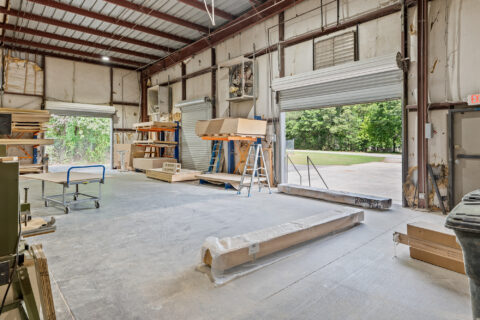
These buildings are used mainly to store goods and move them in and out. They are designed around loading, with dock doors, truck access, and enough ceiling height to stack inventory efficiently.
Flex Facilities
Flex buildings are designed to be used in several ways so the pool of potential tenants isn’t limited. They often combine a finished office or showroom area with warehouse space and are common in industrial and business parks. With features like high ceilings and wide doors, a flex space can work as a showroom, a service center, a light production space, or storage, depending on what the tenant needs.
Key Industrial Terms to Know
Clear Height
Clear height is the usable vertical space inside a building, measured from the floor to the lowest overhead obstruction, such as a roof joist, beam, or light fixture. It matters because it determines how high a tenant can stack inventory or install racking.
Dock-High vs. Grade-Level Doors
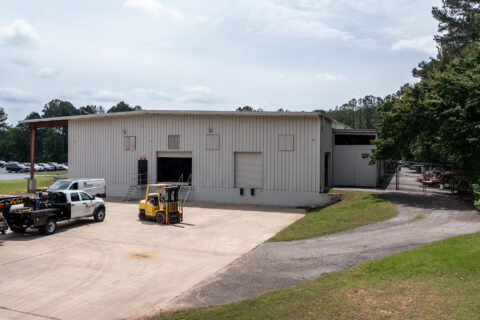
A dock-high door sits at roughly truck-bed height so goods can be moved straight on and off a trailer, usually with a dock leveler. A grade-level door (also called a drive-in door) is at ground level, which allows vehicles, forklifts, and equipment to drive directly into the building. Many tenants need one or both.
Truck Court
The truck court is the paved area outside the dock doors where trucks maneuver, park, and load. A building with plenty of truck court space is easier to operate than one where trucks have to back in tightly.
Cross-Dock
A cross-dock building has dock doors on opposite sides, so goods can move straight through the building from one side to the other. It is popular with distribution users who unload and reload quickly.
Three-Phase Power
Three-phase power is a type of electrical service that many industrial tenants need for heavy machinery and equipment. Confirm what is available at the building before touring, because adding it later can be costly.
Outside Storage
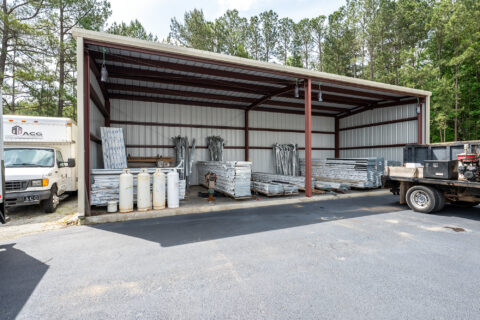
Outside storage (sometimes called an industrial yard) is fenced or paved outdoor space used for equipment, vehicles, or materials. For contractors and equipment-heavy businesses, it can matter as much as the building itself.
Light vs. Heavy Industrial
Light industrial generally covers assembly, light manufacturing, storage, and distribution with limited noise and other impacts on neighbors. Heavy industrial involves large-scale production, heavier equipment, and greater impacts, and it is usually restricted to certain zoning districts.
Industrial Property in Athens
Industrial users in Athens tend to cluster in established industrial parks and corridors, where truck access, zoning, and nearby suppliers are already in place. In Athens-Clarke County, industrial uses are commonly found in Employment-Industrial (E-I) zoning, which supports uses such as light manufacturing, distribution, and contractor operations. The same is true in surrounding communities like Bogart and the rest of Oconee County, where industrial buildings sit close to major routes such as GA 316 and Atlanta Highway. Zoning rules vary by site, so always confirm permitted uses with the local planning office before leasing or buying.
Why Industrial Property Type Matters
- Operations fit: Ceiling height, door types, and truck access can make or break how a tenant runs day to day.
- Flexibility: Flex buildings appeal to a wider range of tenants, which can help owners re-lease space faster.
- Lease structure: Many industrial leases are triple net (NNN), so the tenant pays taxes, insurance, and maintenance in addition to base rent.
- Zoning and growth: The right zoning and room for expansion can matter as much as the building itself.
Industrial Real Estate FAQ
What are the main types of industrial real estate?
The three most common types are manufacturing facilities, warehouse or distribution facilities, and flex space.
What is flex space?
Flex space is an industrial building designed to be used in multiple ways, often combining office or showroom space with warehouse space so it can suit a wide range of tenants.
What does clear height mean?
Clear height is the usable vertical space inside a building, measured from the floor to the lowest overhead obstruction. It determines how high inventory or racking can be stacked.
What is the difference between a dock-high door and a grade-level door?
A dock-high door is at truck-bed height for loading from a trailer. A grade-level door is at ground level so vehicles and forklifts can drive into the building.
What is three-phase power?
Three-phase power is a type of electrical service used to run heavy machinery and equipment, and it is a common requirement for manufacturing and some warehouse tenants.
What is the difference between light and heavy industrial?
Light industrial covers lower-impact uses such as assembly, light manufacturing, and distribution. Heavy industrial involves larger-scale production and heavier equipment, and it is typically limited to certain zoning districts.
Industrial Opportunities in Athens
Looking for industrial, warehouse, or flex space? Browse our current properties. Whether you are leasing, buying, or deciding between building types, our team can help. Learn more about our Leasing Services and Sales and Acquisitions, or contact us. You can also explore more terms in our Commercial Real Estate Terms glossary.
Questions about commercial real estate in Athens?
Contact Brian Elrod, CCIM at 678-859-6110 or brian@naielrod.com
Related Articles:
Retail Real Estate Types Explained: A Guide for Athens, GA
Commercial Development Types Explained: Build-to-Suit, Infill and More
Commercial Development Types Explained: Build-to-Suit, Infill and More
What Does NNN Mean in a Commercial Lease?
What Does NNN Mean in Commercial Real Estate? Complete Triple Net Lease Guide for Athens